Our Mission : Food, Education, Medicine

HELP Cox’s Bazar is committed to addressing the diverse needs of vulnerable populations in Cox’s Bazar and beyond. Its core programs focus on the following thematic areas, each equipped with alliances with relevant stakeholders through a dedicated WhatsApp group where regular discussions and updates are shared:Drowning PreventionImplementation of the National Alliance for Drowning Prevention (NADP) to address the high risks of drowning in coastal areas.Conducting awareness campaigns on water safety, especially targeting children, fishermen, and tourists.Providing swimming lessons, lifesaving equipment, and training on basic rescue skills to the community.Partnering with local authorities to improve water safety infrastructure, such as lifeguard stations and life jackets.Climate ActionEstablishing the Climate Action Platform to address climate-related challenges in Cox’s Bazar.Promoting sustainable practices like eco-friendly farming, renewable energy use, and reforestation.Organizing disaster risk reduction activities, such as early warning systems and community shelters.Advocating for policies to mitigate climate change and supporting communities in adapting to its impacts.Youth EmpowermentOperating the HELP Youth Club to empower young people through leadership training, skill development, and awareness campaigns.Facilitating cultural, recreational, and mental health support activities for youth, including those from host and refugee communities.Promoting youth-led community service projects and encouraging civic engagement.Medical ServicesRunning the HELP Medical Services Centre to provide healthcare for vulnerable populations, including refugees and local communities.Offering primary healthcare, maternal and child health services, mental health support, and disability rehabilitation.Conducting health awareness sessions on hygiene, nutrition, and reproductive health.Gender-Based Violence (GBV) PreventionOperating the GBV Prevention Forum to raise awareness about GBV and provide support to survivors.Conducting community training on recognizing and addressing GBV, with a focus on survivor-centered approaches.Collaborating with local and international organizations to strengthen GBV prevention mechanisms and improve access to legal, medical, and psychological support.Human Trafficking Prevention and Safe MigrationLeading efforts through the Human Trafficking Prevention and Safe Migration Forum to combat trafficking and promote safe migration.Organizing training sessions on anti-trafficking measures and safe migration practices.Providing direct support to trafficking survivors, including legal aid, livelihoods assistance, and rehabilitation services.Raising awareness in communities about the risks of trafficking and the importance of using legal migration channels.Water, Sanitation, and Hygiene (WASH)Ensuring access to safe drinking water and sanitation facilities through the rehabilitation of tube wells and latrines.Promoting hygiene awareness to reduce waterborne diseases and improve public health.Collaborating with local stakeholders to implement sustainable WASH solutions.Disaster Preparedness and ManagementEquipping communities to handle natural disasters such as cyclones and floods through awareness and training programs.Supporting disaster-affected populations with emergency relief, including food, water, and temporary shelters.Working with local authorities to develop and implement disaster response strategies.Organization’s Capacity:The organization is gradually growing larger. Presently HELP Cox’s Bazar has three moderately equipped offices to run its activities. Locations of these three offices are given below: Head Office:Liaison Office:Painnashia, PO. Jaliapalong PS. Ukhiya Dist. Cox’s Bazar-4750, Bangladesh.Adv. Abu Taher Bhaban, Airport Road, New Baharchhara, Cox’s Bazar-4700, Bangladesh.Project Office:Farid Mansion, Masjid Road, Court Bazar, Ukhia, Cox's BazarHuman Resource:Staff and other Information:Staff CategoryFemaleMaleTotalSenior Level020810Mid-Level051419Field Level (Full Time)093847Field Level (Part Time)021315Volunteer (Paid)163046Volunteer (Un-Paid)100150250Total134253387Geographical Presence:Policies & Guidelines: The organization has developed different policies and guidelines, which are approved by the appropriate authority and are practiced for smooth implementation/operation of different programme/projects; administration and management; finance, accounts and audit. The list of the policies and guidelines are shown in follows; Sl.Name of policies and guidelineIntroduced sinceRemarksConstitution 01.01.20013rd edition on 01.07.2016Human Resource (HR) Police 01.07.20024th edition on 01.07.2017Finance Policy01.07.20023rd edition on 01.07.2018Audit Policy01.07.2014Conflict of Interest Policy01.01.20013rd edition on 01.07.2016Gender Policy01.07.20133rd edition on 01.01.2018Procurement Policy01.07.20023rd edition on 01.05.2017Vehicle Policy01.07.2012PSEA Policy2017Safe Guard Policy2017Communication Strategy and Branding2023Health and Protection Guideline Policy2023General Management:The overall management of the organization is guided by the approved constitution. General Committee (GC) is the highest body of HELP Cox’s Bazar. It consists of thirty three members from different professionals. The general committee elects the Executive Committee (EC) for a period of three years. Presently, there are eleven members in the executive committee. It performs all responsibilities on behalf of the general committee. The EC appoints the Executive Director (ED) of the organization. He is responsible for overall management and keeping contact with the donor agencies. Besides, there is a seven-member advisory committee to advise the EC and ED in policy matters. There is programme operation division headed by Programme Director. Programme Director looks after overall programme operations, coordination and management. He/she assists the ED and directly accountable to him. He/she is assisted by the Programme Manager and Project Coordinators. \tThere are separate human resource & administration, training, finance & accounts and audit units. The human resource, finance & administration unit is headed by one Manager (HR, Finance & Admin), who is assisted by other administrative staffs. There is one Procurement Officer responsible for overall procurement and supplying the logistics is reportable to the Manager (HR, Finance & Admin). Training Officer is the head of training unit and assisted by other trainers. Manager (HR, Finance & Admin) is the head of finance & accounts unit and responsible for overall financial management. He/she is assisted by one Senior Finance Officer (Finance & Accounts) and other accounts personnel. There is one Officer (Audit), acting as the head of audit unit is responsible for overall internal audit management. Furthermore, there is a 5-member Senior Management Team (SMT) comprising ED, Programme Directors, Manager (HR, Finance & Admin) and two Project Coordinators, who meet once in a week to review the overall administrative and management issues. A monthly coordination meeting is also held at head office with all projects chiefs with ED in the chair, for reviewing the overall issues. Supervision & Monitoring The monitoring unit provides monitoring oversight for all programme activities. There is annual monitoring plan and the monitoring indicators are set up based on the outputs and activities. The regular information is collected using various tools and techniques following the participatory monitoring process. The monitoring unit interviewed various stakeholders including beneficiaries, local administrations and the UP. They produce reports based on the field findings and submit it to the management. The management takes appropriate measures where necessary. The progress is also monitored/review in the monthly staff coordination meetings held at organization's head/project office, which is documented in meeting minutes and circulated at field offices. Project experience sharing workshops are also organized with different stakeholders to exchange views and produce recommendations. The following mechanisms are followed in monitoring and supervision the project: Set up monitoring indicators based on the outputs and activities. Information collection using different monitoring tools. Field visits for physical verification and interviewing the project participants and stakeholders. Analyze/review of monitoring and progress reports. Monthly progresses review/sharing meeting and analyzing targets against achievements. Research & Documentation:The periphery of HELP Cox’s Bazar is developing day by day. It believes in changes and likes to adopt the things which have proven good, more effective and user friendly. There are many success as well as failure history in the way, in which different programs are implementing. To promote the successful interventions as well as minimizing the failures it needs to learn the reason behind it. It helps promoting the best learning experience/practices, upgrade HELP Cox’s Bazar’s service delivery thus the project participants become more benefited. Likely, minimization of the failures save the resources thus makes the programs cost effective. Further, it gives appropriate directions for project designing and expansions. The ‘Research and Documentation Unit’ has established in 2015, headed by the Officer (R&D). The unit is responsible to document all programme performances and successful events as publications like- book-lets, case studies, magazines and reports. The publications help others to learn the best learning practices. HELP Cox’s Bazar also have a good collection of photographic and video documentation, preserved in head/project offices. Evaluation:In most of the project at the beginning, a baseline survey/FGD is conducted to know the present situation for developing the database. In general the evaluation for a particular programme/project (based on the dimension of activities and importance) is done through appointing external expertise/farms. Depending on duration of the project, sometimes, either annual, mid-term or end evaluation is done. The evaluation documents/reports are kept in the organization's head office thus analyzed by the senior management. The best learning practices are considered in designing of any project in the next or required modification in the project is made based on the recommendations. Reporting:MIS information is regularly collected at field level using prescribed formats on a daily/weekly basis as per needs of the project & compiled on weekly/monthly basis primarily in the branch/project offices, which again compiled by the programme/project chiefs to produce monthly reports & sending it to the management/development partners/donors as per their requisite. The Annual Report of HCB is prepared based on the performance of all programme/projects supported with case studies, impact analysis and photographic evidences. Project closing reports are also made at the end of the projects. Financial Management: There is an approved financial policy in the organization to guide overall finance. Where provided/requested, HCB implements donor guidelines for funded projects. In general bills and vouchers are checked by the assigned accountant and reviewed by the Managers and finally approved by the Executive Director. There is a ‘mother’ account for head office banking transaction which is operated by three signatories including the ED. The monthly/quarterly/ annual/closing financial statements are made, which is accompanied with bank statement and is submitted to the management/donors accordingly. Fund Management: An annual budget plan is made focusing all sources of funding and likely a separate budget plan for each programme/project. There is an independent accounts unit for general fund management and a separate staff members (accountant) assigned in each individual project. The ‘mother accounts’ is operated by three signatories-President, ED and Treasurer. Each project has separate bank accounts and all forms of expenditure are made following the approved budget. Further, a quarterly budget review meeting is organized with the ED in chair. Audit: There is an internal auditor, responsible for audit all sorts of expenditure of the organization. The person frequently and regularly visits different programme/projects. Further, it also audits the accounts expenditure of the organization’s head office. The person conducts audit at field level- visits the project offices, Based on findings, the person submits audit reports to the management. Further, the qualified NGOAB selected registered charter accounting farm is appointed for auditing all annual financial transaction of the organization following terms of reference (TOR). Likewise, the external audit farms also audit the accounts expenditure of the programme/projects at the end of the year and/or on the closing of the project. Present & Past Project: HELP Cox’s Bazar awarded 37 projects as of 2024. Presently 04 projects are ongoing and 33 projects completed earlier. Below is the list of projects and donors and also time frame. Name of the projectKey activitiesDonorStarting TimeWorking AreasEnsuring smooth Functioning of WASH facilities through proper Maintenance and repairing for the Forcibly DisplacedMyanmar Nationals(FDMN) in Cox’s BazarRepair& maintenance of Deep tube wells & tap stands Repair& maintenance of Latrines cubiclesTechnical support Repair & maintenance bathing cubicles Repair & maintenance women hygiene center. Solid waste management. Hygiene awareness Waste collection from household bins, community bins and communal pits.GAC & DEFAT BRACDec. 2023FDMN Camp 4 Extension, Ukhiya, Cox’s BazarHumanitarian Assistance for Rohingya & Hostcommunity in Cox’s BazarLocalization Gender & disability Inclusion. DFAT & BRACJan. 2021Ukhiya Upazilla of Cox’s BazarPromoting the status of the persons with disability through Learning & development.Different need based trainingPsychosocial counselingPrimary Health support including assistive devices Livelihood support Legal aid support Referral servicesEarlier Donor was Australian Aid and now it is running by org’s own efforts.\t2018Ukhiya Sub- DistrictPromoting cohesion through reducing domestic violenceFamily counseling & minor dispute mitigation Legal aid Referral servicesHELP’s own support2012Ukhiya Sub- districtCombat Trafficking In-PersonsPast Project Sl.Name of the ProjectKey ActivitiesDonorsYear of ImplementationWorking Areas6. Health services for the affected Rohingya Community in Cox’s Bazar -Health support through clinic in Rohingya camps. -Awareness raising on primary health care among the Rohingya community. Love Army Mar’19 Camp 17 7. Garbage cleaning in the forcibly displaced Myanmar Rohingya camps in Cox’s Bazar -Cleaning garbage in Rohingya camps. -Awareness raising on garbage management among the Rohingya community. Love Army Mar’19 Camp 5 and 17. 8 Tube wells repairing for the affected Rohingya community in different camps -Repairing of tube wells. -Local capacity building. Love Army Mar’19 Camp 5 and 17. 9 Health service project In host and Rohingya community of Ukhiya Upazilla. -Organize satellite clinic at Union and camp level. -Organize awareness sessions on the following topics: Personal Hygiene, Immunization programme and child nutrition,-Take care of pregnant women, Reproductive health, Disaster preparedness, -HH visit by health worker, Establish billboards with health messages. Action Medeor Jul’19 3 unions of Ukhiya and Camp 05 and 17. 10 Support to health clinic -Provide medicine support to health Clinic. CZM (Center for Zakat management Sept’19 Camp 17 11 Awareness program on health education and family planning -Awareness session with youth (boys and girls), men & women. -Distribution of family planning materials among men and women. Government of Family Planning Dept. June- July 2019 Ukhiya 12 Awareness and treatment on primary health care -Awareness session with school children, men and women. -Treatment support through organizing satellite clinic. -Provide medicine support. Government Health Dept. Ukhiya 13 Sustainable Disaster Risk Reduction, WASH & Gender Based Violence Protection for Rohingya Community of Cox’s Bazar District -To build bathing cubicles, latrines, deep tube wells. -Awareness sessions on health and hygiene. -Awareness sessions on G.B.V for women, adolescent girls. BRAC Funded By: SEMNA NI FAMILY FOUNDATION January- April 2019 Camp 7 14 Community Engagement In Countering Violent Extremism in Cox’s Bazar (CEVEC) -Youth Group Formation & Mobilization. -Provide TOT on life skills education. -Provide leadership training on CVE to youth forums. -Provide life skills education to youth groups at ward level. -Community engagement on CVE like Flash mob, cycle rally, dialogue with religious and political leaders, signature campaign, candle light vigils, Day observance, press conference, Youth rally, story - telling events, debate, camp. -Provide orientations to the representatives of Local Government Institutions at Union, Upazila and Municipality level. Global Community Engagement &Resilience Fund (GCERF) Switzerland. Through YPSA as Consortium lead. 2017- 2018 Ukhiya 15 Combat human trafficking In Bangladesh through the promotion of safe Migration -Conduct training for Union Digital center (UDC) official to conduct training & information services for the potential migrants. -Strengthening Combat trafficking committee -Develop union Parishad based Aniti Trafficking youth Forum in creating awareness. -Provide direct assistance to the victims of trafficking on livelihoods support -Awareness on safe migration Relief International and US Department of state office to combat Trafficking in Person. 2014 to 2018 16 Emergency Health Care & NFI Support and enhancement the dignity of women and young girls to the Forcibly Displaced Myanmar project. -Provide medical support for men, men and children through health clinic. -Women’s and adolescent group formation and court yard meeting on health education, hygiene, sanitation & women development. -Meeting with adolescent boys and girls. -NFI distribution for camp 17 areas 900 families. Bring Hope humanitarian foundation 2018 Camp 5 17 Enhance the dignity of women, younger girls & children through awareness against gender based violence (GBV) to the displaced Myanmar National (DMN) (new arrivals) in Cox’s Bazar, District, Bangladesh. -Increase awareness among refuges especially women and girls, men and adolescent boys about GBV, how to identify risk early, reporting channels and available services at project location. -Support in referrals women & girls survivors of GBV, ensure safe spaces, for survivors including legal, medical and psychological support through collaborating with existing service providers. Oxfam GB 2018 \tCamp 12 and camp 19 18 Emergency Response Against Gender Based Violence -Camp/Zone/Blok wise Multi stakeholders Committee Formation, orientation & Monthly Meeting on CGBV. -Block wise women group formation, orientation & monthly Meeting on CGBV. -Organize Court yard Meeting. -Formation of folk song group & arrange Folk song. -Bill Board installation with the message on CGBV. -Distributing of Dignity kits -Observation National & international day. Community Partner International (CPI) 2018 Camp 5 19Protection of women & child through combat Human trafficking (PWCT) & emergency support to the FDMN Cox’s Bazar District , Bangladesh-Camp / Zone / Block wise Multi stakeholder Committee Formation, orientation & Monthly Meeting on PWCT. -Block wise women group formation, orientation & monthly Meeting on PWCT. -Organize Court yard Meeting -Formation of folk song group & arrange Folk song. -Bill Board installation with the message on PWCT. -Distributing of Dignity kits. -Publish different IEC Materials. -Organize women gathering & Observation National & international day. -Establish Medical Camps & provide Free Medical support including Medicine. Individual donor from Netherland (Bendagani Netherland) 2018 20To implement activities to prevent, mitigate & respond to Gender based violence among undocumented Myanmar Nationals (CUMNS) in Cox’s Bazar -Formation of groups: women, men and girl. -Awareness programme among the group members. -Awareness programme among Imam, reporters, community leaders. -Orient referral mechanism etc. IOM 2017 Ukhiya and Teknaf 21 Government Safety net program (Doridro Maer jonna Matritto Kalin Bhata) -Group formation with vulnerable women -Skill training on IGAs. -Awareness session on social issues. Ministry of women and Child Affairs 2016- 2017 Teknaf, Ukhiya, Ramu, Cox’s Bazar Sadar, Mohesk hali. 22 Combating Domestic Violence (CDV) -Legal aid support. -Awareness activities. -Connecting people with government law enforcement agencies. -Organize shalish mediation. Manusher Jonno Foundation (MJF) Cox’s Bazar Dist,Naikhun suri 23 Vulnerable Group Development (VGD) -Women group formation. -Skill training on different issues. Ministry of women & Child Affairs, Bangladesh 2015- 2016 Ukhiya 24 Human rights mobilization, human rights violation & family violence Information dissemination Project -Information collection on family violence and inform to the local administration. -Inform to the Police with evidence of violence. -Publish news in the newspaper on violence issues. Manusher Jonno Foundation (MJF) 2007 Teknaf and Ukhiya 25 24 hours hot line services to combat women & child trafficking & prevention -Collect information on trafficking issues and inform to the local administration. Khan Foundation/ Danish Embassy 2011 Teknaf and Ukhiya 26Partnership for the promotion of Right Based Development Approach & Governance (RBD&G) -Group formation. -Aware people on the root causes of the problems. -Aware on how those problems can be solved. IVS- Bangladesh. 2010 Ukhiya 27 Communication for Development: promoting sustainable behavior and social development changed in Cox's Bazar district. *C4D Project.-Stopping physical touchier on children. -Provide Hygiene awareness -Organize school committee meeting. -Aware local community on child rights issues including primary health care issues.BRAC/UNI CEF Bangladesh 2011 Teknaf & Ukhiya 28 Strengthening, accelerating, & implementing the law of Bangladesh, 100% smoking free & with a view to tax promotion & expanding the local activities -Awareness programme to men and women. -Campaign programme to aware the people to stop smoking. -Aware people to keep office, bus, train as non-smoking areas. -Aware people through leaflet, poster distribution. The UNION 2008- 2010 Ukhiya 29 Non-Formal Education for School Dropout Children (NFPEP) -Organize non formal schools for drop out students. BRAC Bangladesh 2007- 2012 Ukhiya 30 Youth empowerment through life skills education and livelihood opportunities project UNFPA -Youth group formation. -Awareness on reproductive health. -Awareness on the bad impacts of early marriage. -Provide life skill training. -Day observations. -Organize street drama against early marriage. UNFPA 2010 Ukhiya 31Community based adaptation in the ecologically critical areas through biodiversity conservation (CBAECA) -Tree plantation. -Seed supply. -Rice cultivation. -Solar system establishes. -Group formation with fishermen. -Provide different IGA training. -Awareness programme. Directorate of Environment 2012 Ukhiya Working Experience Concretization: Concretization is the most and important program of the organization. It begins from the start and continues continuously for raising mass awareness in all respects among the targeted and other community people. So far it has concretized approximately 25000 people in different respects. Now the community people of HELP working areas are fairly conscious in all respects and they can understand that their development should be done by themselves. In this regards, HELP applies different methods like: personal contacts, door step visits, group meetings, gathering, seminars, workshops, folk song, popular theatres, circulate posters, leaflets, stickers, charts, billboards, signboards etc. Gender Based Violence: Discrimination against women and girls that starts from the day of birth of a girl child is largely rooted into our traditional culture and social practices. Lack of proper laws and their proper implementation perpetuate women's subjugation to men and make them more susceptible to repression leading to violence. The shame and stigma, the trauma and humiliation infected upon women and children through any such happening forgoes a long lasting adverse effect in the lives of the victims, which may in some cases end up in their mental and physical disorder leaving little hopes for their survival. Moreover, acute poverty also restricts their access to the justice system. HELP Cox’s Bazar is experienced to address the rights of women. It has experience in implementation of combating domestic violence projects. HELP addresses the women violence issues through different ways like; formation of different level groups and committees, aware those committees on women violence issues and how to protect the women. Groups are organized and received skills and knowledge through having meetings, trainings, networking etc. HELP Cox’s Bazar also organizes weekly Salish mediation at union levels and solves the domestic violence. HELP Cox’s Bazar also forms legal aid committee at union level and raise the un-dissolved issues into the court. HELP Cox’s Bazar has experienced in implementation of GBV projects in Rohingya camps through organizing awareness activities: court yard meeting, folk song, leaflet, billboards etc. Organization was also involved in referral process to shift the serious cases to other organizations and departments. Counter Human Trafficking: Human trafficking has emerged as a great challenge for the entire world. The situation of human trafficking in Bangladesh is no different from the other countries of Asia. The trend of human trafficking has been increased in Cox’s Bazar due to Rohingya influx. Both Host and Rohingya communities are the sufferer. HELP Cox’s Bazar is working with the objectives: To prevent of human trafficking Protection to the victims and survivors of human trafficking Multi-stakeholders partnerships that mobilize and share knowledge, expertise, technology and financial resources to support the achievement in combating human trafficking. HELP Cox’s Bazar has different forum and committees to address those objectives. It has formed Union level youth forum, working with Union and Upazilla level government anti-trafficking committees. HELP Cox’s Bazar organize the following activities: Court yard meeting Organize training on anti-trafficking and safe migration issues Leaflet, poster and billboard placement. Organize anti trafficking campaign Life skill training Livelihoods support to victims. Education: Help Cox’s Bazar has been working on education sector since its inception (2001). Initially HELP Cox’s Bazar opened a kinder garden school in Court Bazar, Ukhiya, It was run from 2000 to 2007. At least, 600 children got their pre-primary (play to KG) and primary (Class I to V) education supports from this initiative. HELP Cox’s Bazar implemented a non-formal primary education programme supported by BRAC from 2005 to 2010 in Ukhiya through establishing 20 centers and approx. 750 drop out children received education support in 04 unions of Ukhiya Upazila in 2010, Help Cox’s Bazar run a school programme for un registered Rohingya children (4-10 years old) in Leda camp with the support of BRAC and using its own fund. Total 200 children got education support through 05 schools over the one year project time. HELP Cox’s Bazar also experienced in implementing education programme with the support of Education Department of Bangladesh Government. With the support of Education Department of GOB, Help Cox’s Bazar opened 84 schools in Ukhiya, Teknaf and Ramu Upazila’s of Cox’s Bazar district in 2011. Total 2,520 school dropout children got non- formal primary education support for 02 years. Rohingya Context:Help Cox’s Bazar is actively involved in providing emergency and other supports to Rohingya people since its arrival in August 2017. HELP Cox’s Bazar provided emergency health support to the affected people in the month of August and September 2017. Distributed food and nonfood items to 2000 HH supported by Janmabhumi TV in Australia in 2017. Distributed cloths among 5000 persons supported by local people and ABC TV in Australia. Distributed food and nonfood items to 7,500 families with the support of Indonesian NGO Alliance in 2017. Provided temporary latrine, tube wells, bathing place etc with the support of individual donors. Provided deep tube wells and latrines support with the help of BRAC in 2018. Implemented GBV and Anti trafficking activities among the affected people with the support of IOM, Oxfam, CPI. From January 2018 to still now, Help Cox’s Bazar is providing basic health support to the Rohingya community through establishing clinics funded by Bring Hope Foundation and Love Army. With the financial support of Love Army, Organization is also providing WASH support to the Rohingya people living in camp 03, 04 05 and 17. Primary Health Care:Help Cox’s Bazar has been working on health & family planning project since its inception (2001). Executive Director of HELP Cox’s Bazar was an employee of government health department with health background. HELP Cox’s Bazar has one permanent doctor working in health sector. It has many health volunteers in the local community. Help Cox’s Bazar provided emergency health supports to the Rohingya people using it’s own fund. Help Cox’s Bazar already Implemented different health projects funded by: Bring Hope Humanitarian Foundation, Love Army, Action Medeor and UNFPA in Rohingya camp and host communities. HELP Cox’s Bazar has good linkage with government health and family planning departments and implements their some projects in Ukhiya Upazila. It has one health clinic in camp 5 and operating since January 2018. Major interventions under primary health sector are: Health awareness sessions HH visits Organize satellite clinic Primary health treatment through clinic with medicine support Bill boards placementPoster, Leaflet DistributionWaSH (Water Sanitation & Hygiene):Water, Sanitation & hygiene Program is one of the major development activities of HELP Cox’s Bazar. Safe drinking water and hygienic sanitation is a must for the safety of life as well as sound environment. HELP Cox’s Bazar undertook this program in order to ensure safe drinking water and hygienic sanitation in the rural area because the people of this area are ignored, unaware and not knowledgeable about the importance and need of safe drinking water and hygienic sanitation. HELP Cox’s Bazar has been implementing Water and Sanitation program under financial and technical assistance of its own contribution and individual donation for Drinking Water supply and Sanitation considering the inadequate access of villagers to safe drinking water and hygienic sanitary facilities. HELP Cox’s Bazar is implementing the Model Village project with collaboration of village development committee, which is also formed by the Organization. In this regard, HELP Cox’s Bazar organizes monthly VDC meeting, courtyard meeting, school meeting, tea-stall meeting, Imam Orientation, group meeting. With the support of NGO forum, it has installed 12 tube wells and 1050 water sealed latrine I different unions of Ukhiya Upazila. Established 1 latrine production center with the support of NGO Forum for DWSS and continuously producing water sealed latrine for the community people and the community people are consuming the produced latrine, because, they have become aware about their health and sanitation issues. Recently HELP Cox’s Bazar implemented a WASH project funded by BRAC providing with 07 deep tube wells, 42 bathing places and 85 latrines in Rohingya camp. It has also option to provide awareness messages among the project participants. With the support of Love Army, HELP Cox’s Bazar is providing repairing and maintenance supports of tube wells in camps 05 and 17. A garbage cleaning project also being implemented in camps 5 and 17 with the financial support of love army.





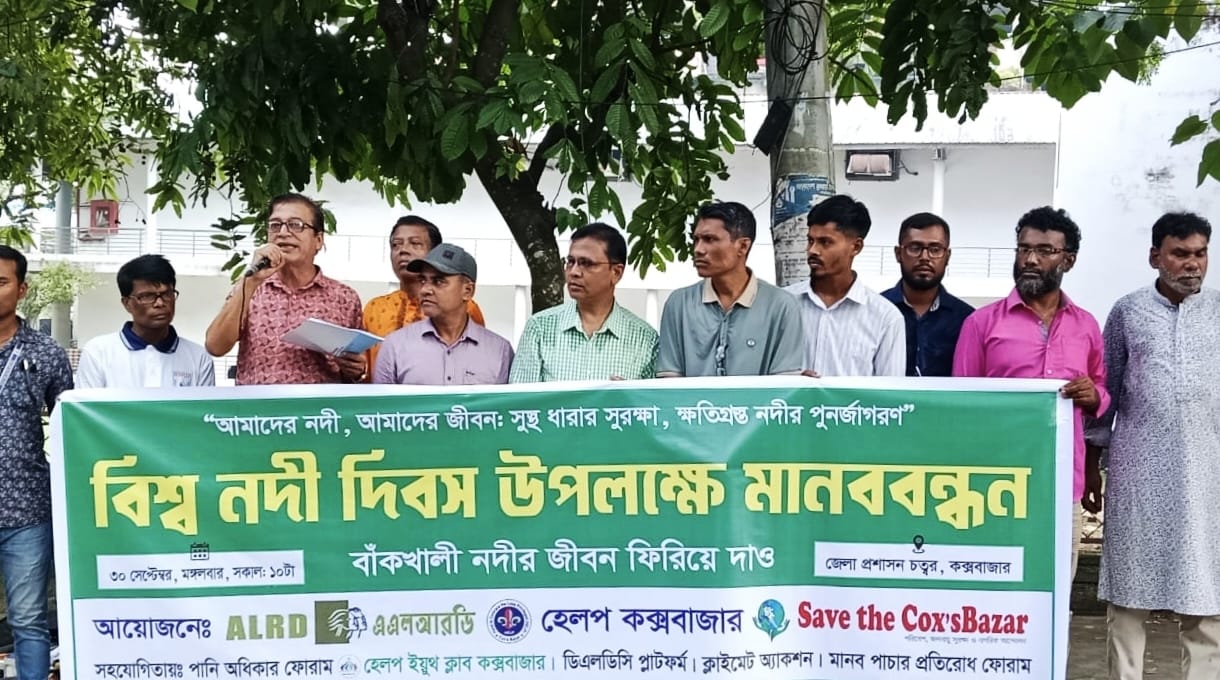
3rd October 2025
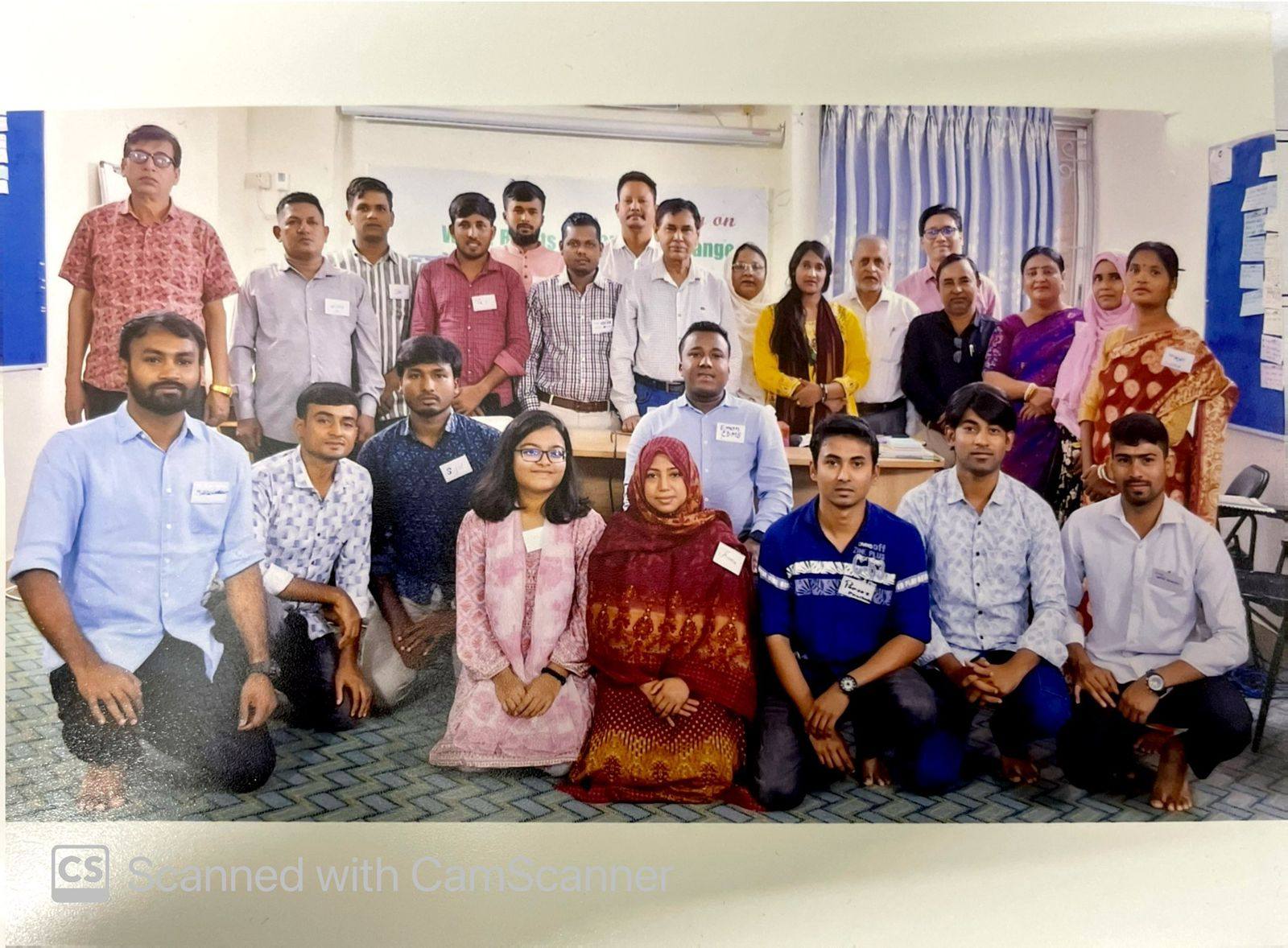
Water Rights and climate change change
3rd October 2025
2nd August 2025
.png)
16th July 2025
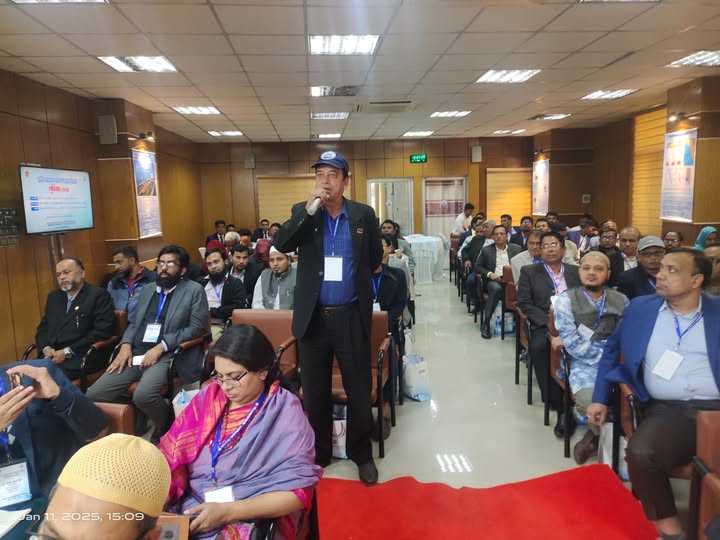
.png "HELP Coxsbazar")
.png)
0 Comments